First of the season: the first yellow zucchini in the country
Grower Jan-Willem Doelman harvested his yellow zucchini a month earlier this year
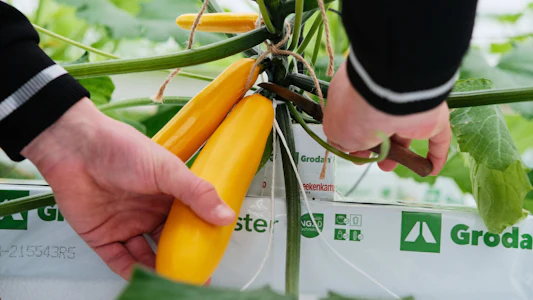
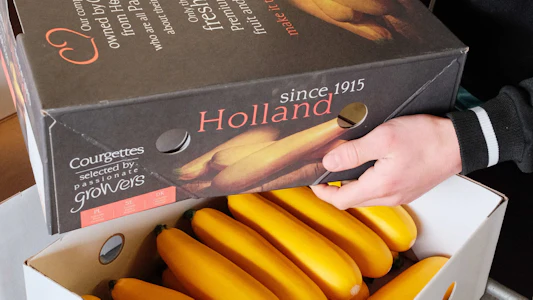
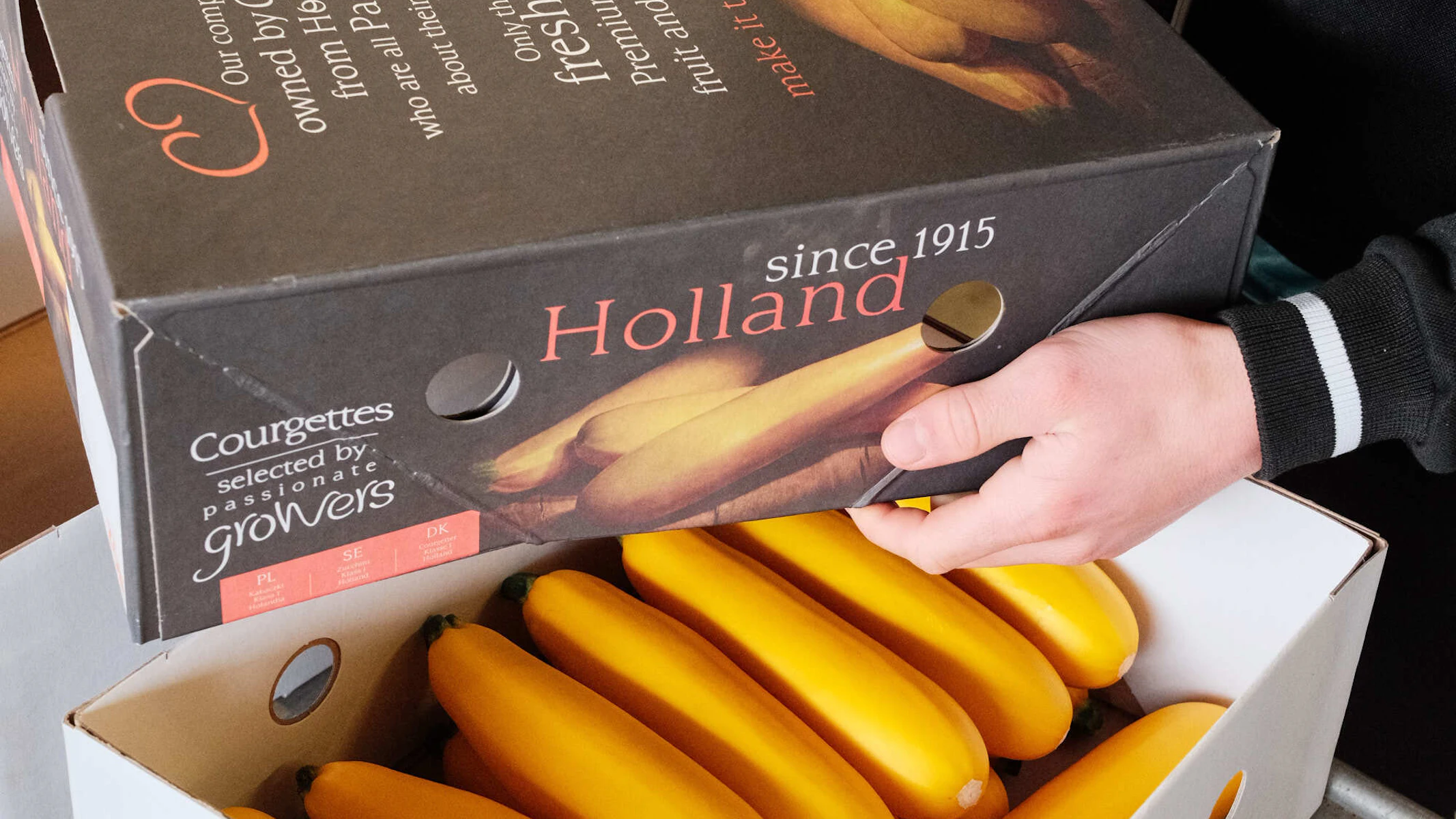
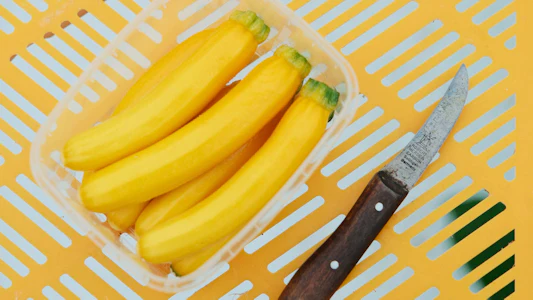
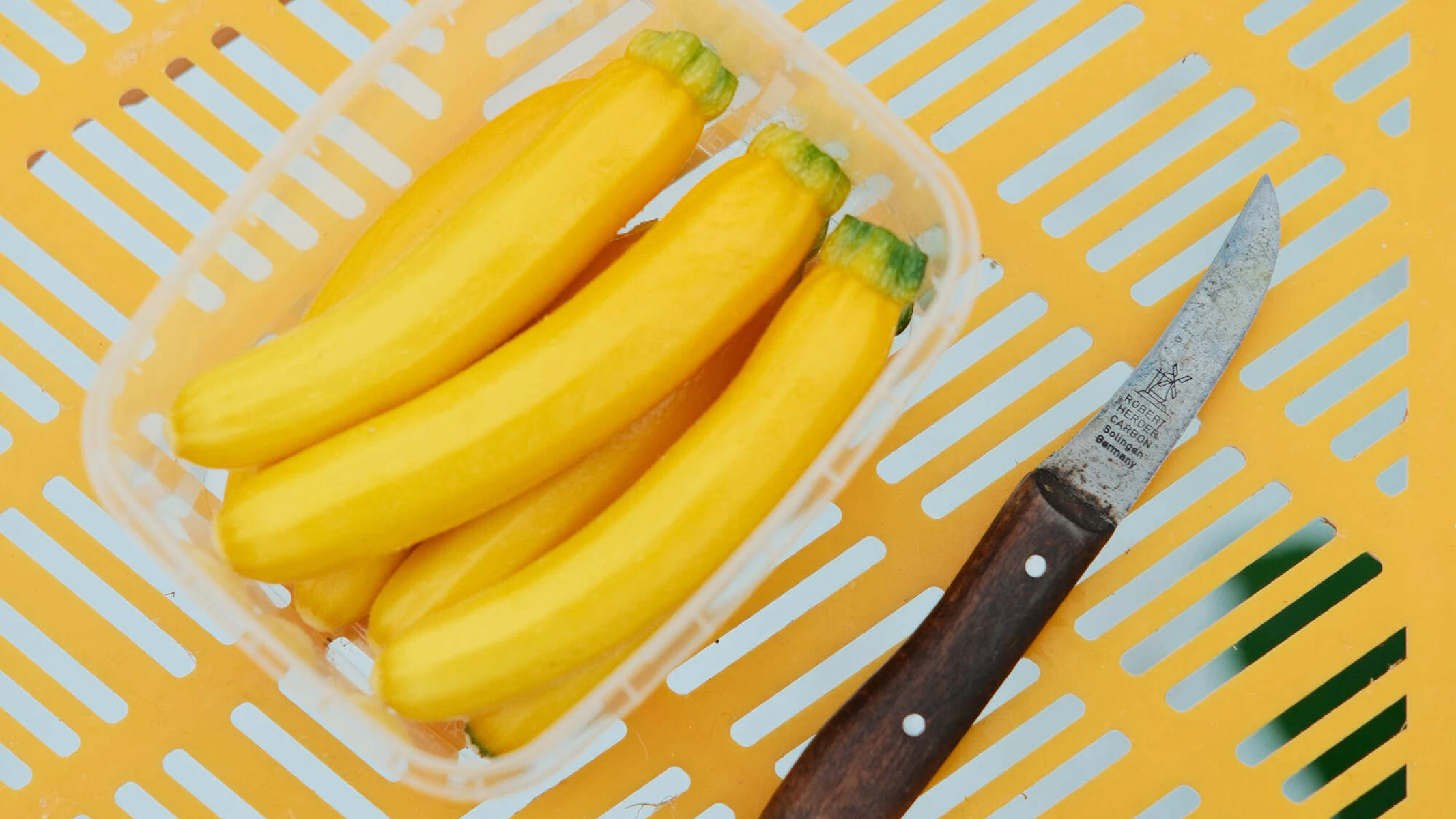
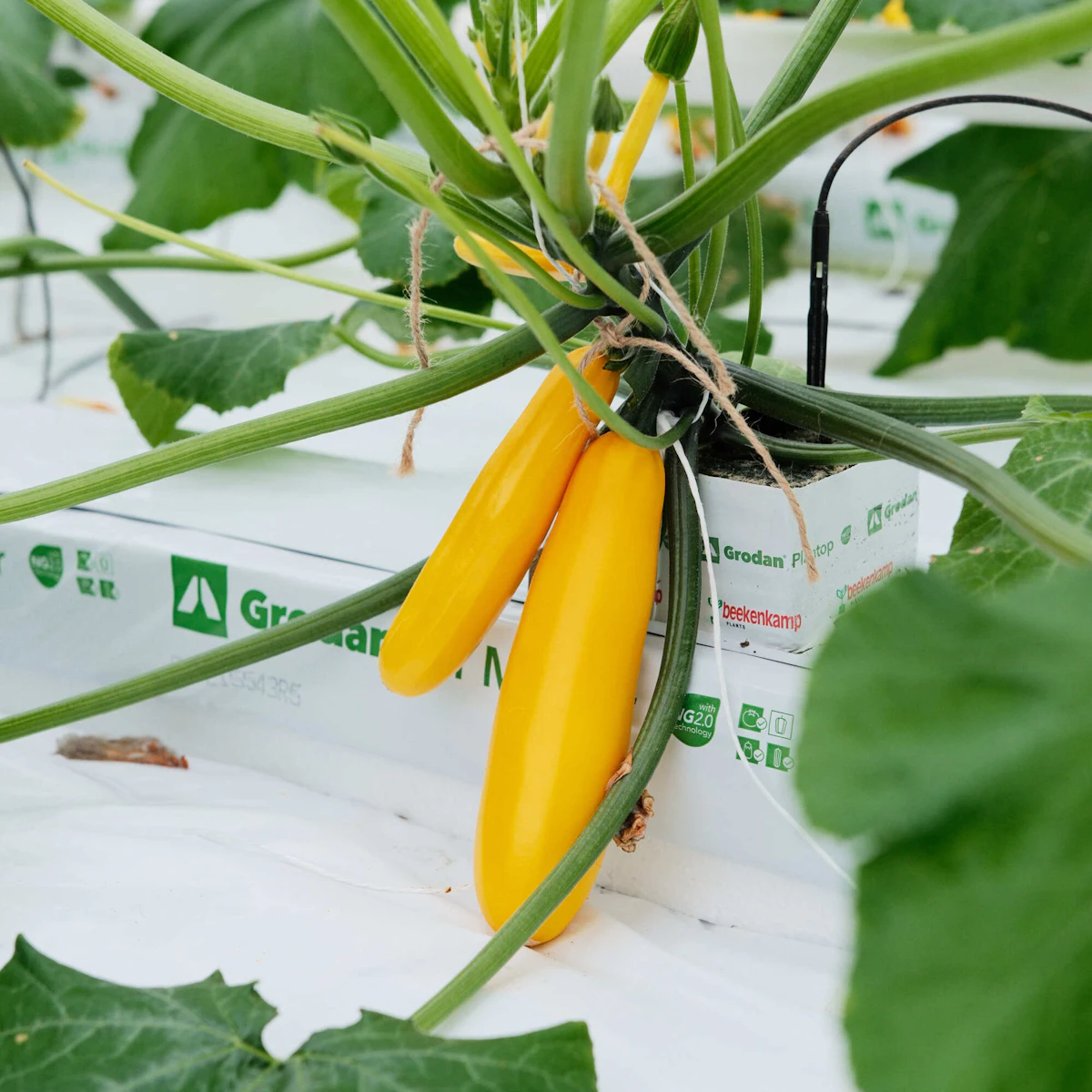
It’s still early as we drive from Venlo toward the Westland region. A faint sun is just breaking through a sea of glass as we arrive at the Nollaantje in Maasdijk, where zucchini grower Jan-Willem Doelman runs his business. The greenhouse landscape is crisscrossed by narrow roads, with the occasional quaint little house stubbornly standing its ground amid the gleaming steel and glass. Food has been produced in this area day in and day out for generations. Today, however, is a special day, because Jan-Willem harvested the very first yellow zucchini grown on Dutch soil this morning—almost a month earlier than usual.
From father to son (and beyond)
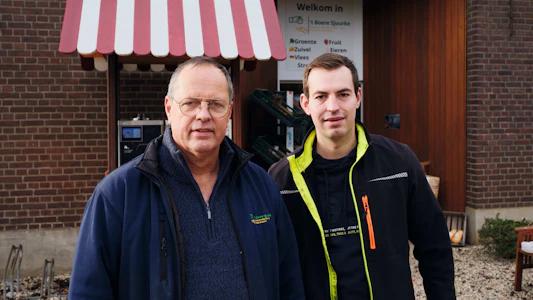
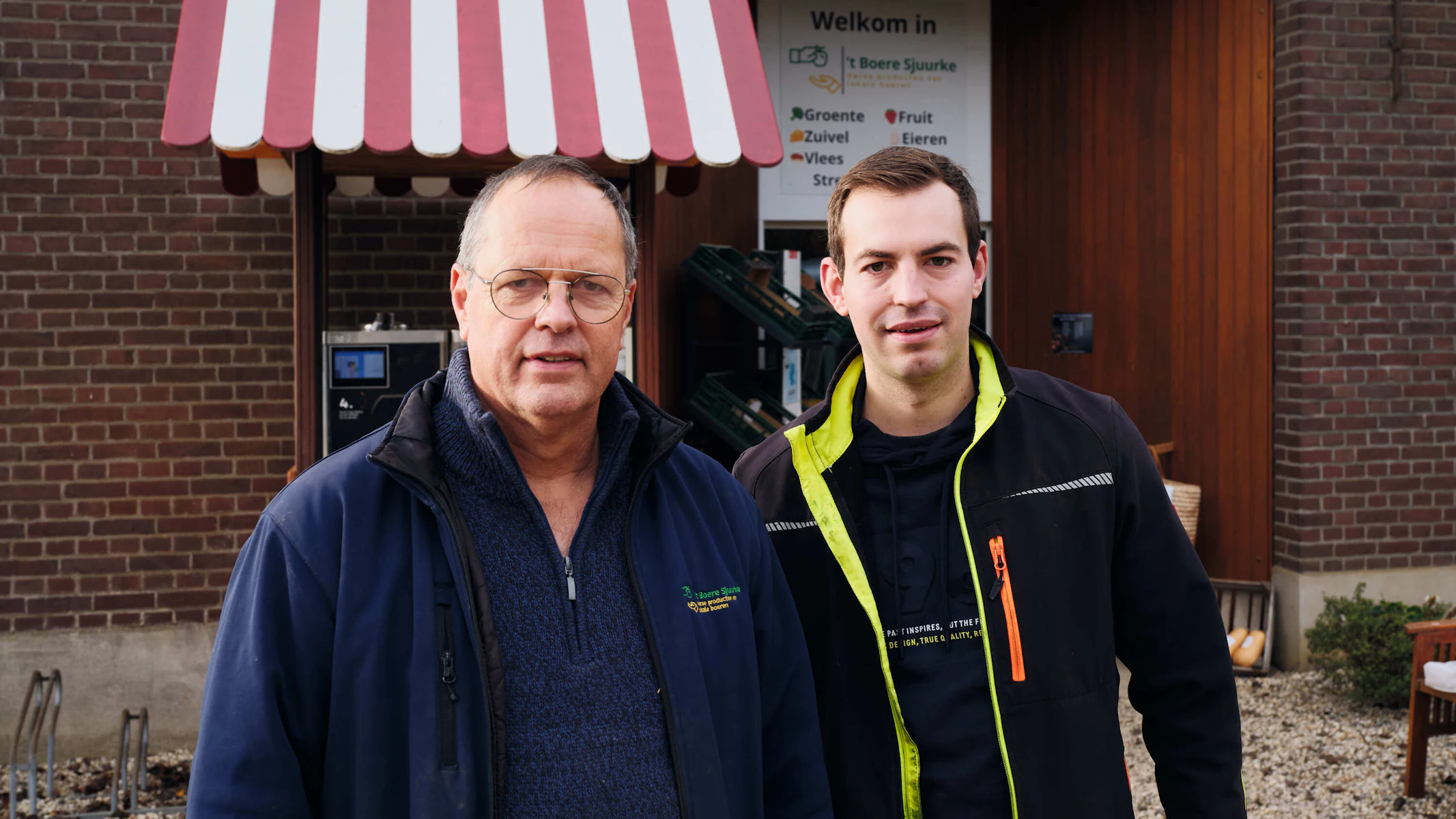
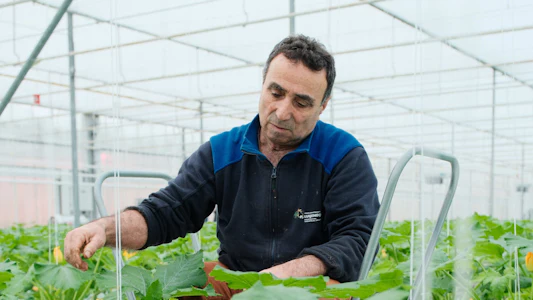
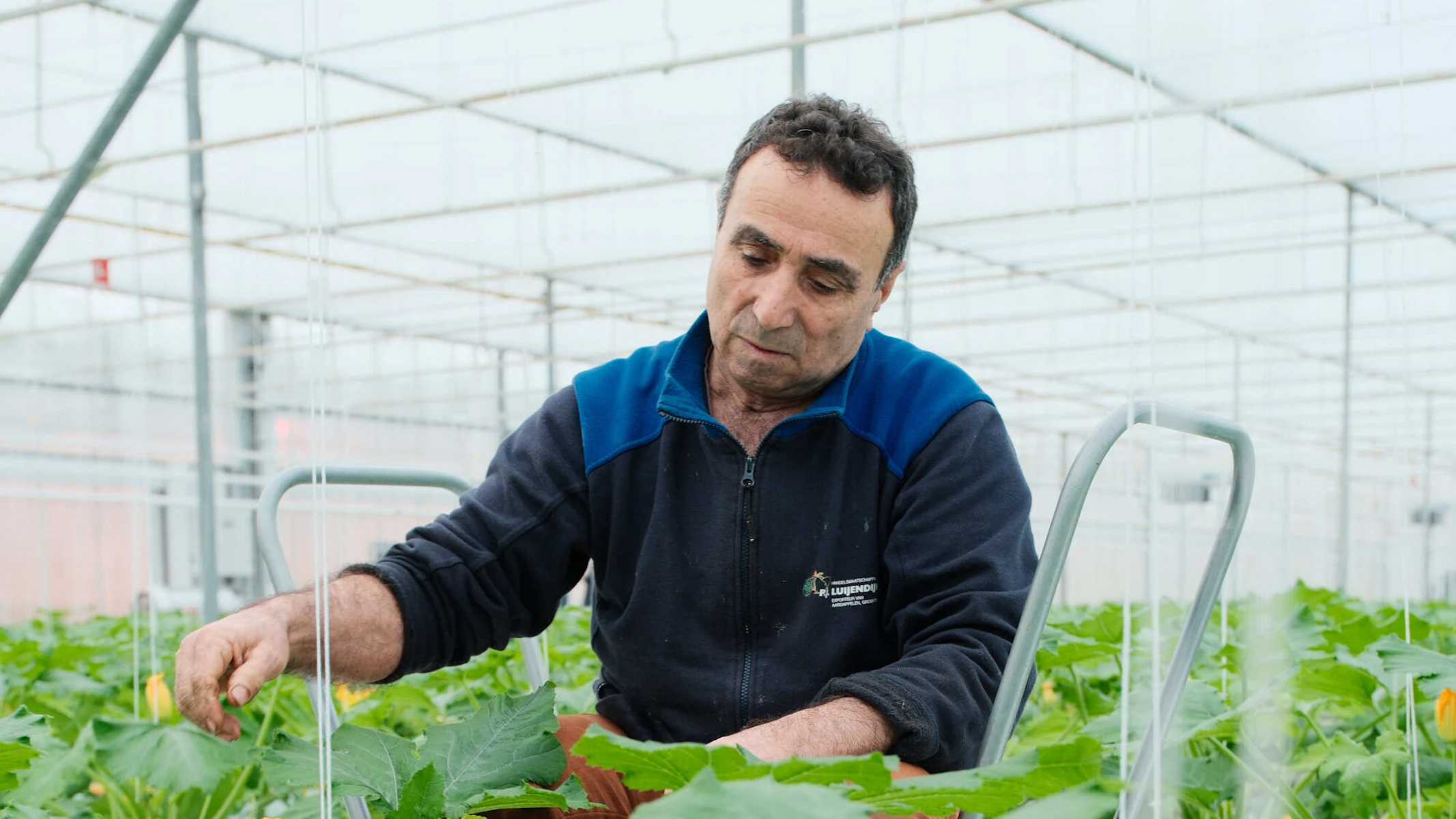
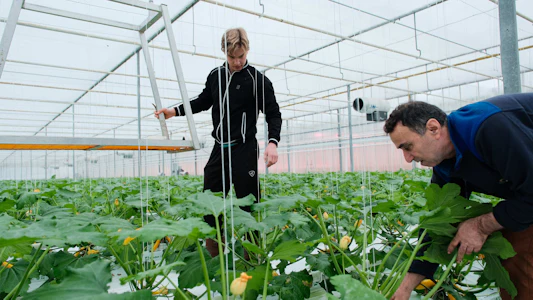
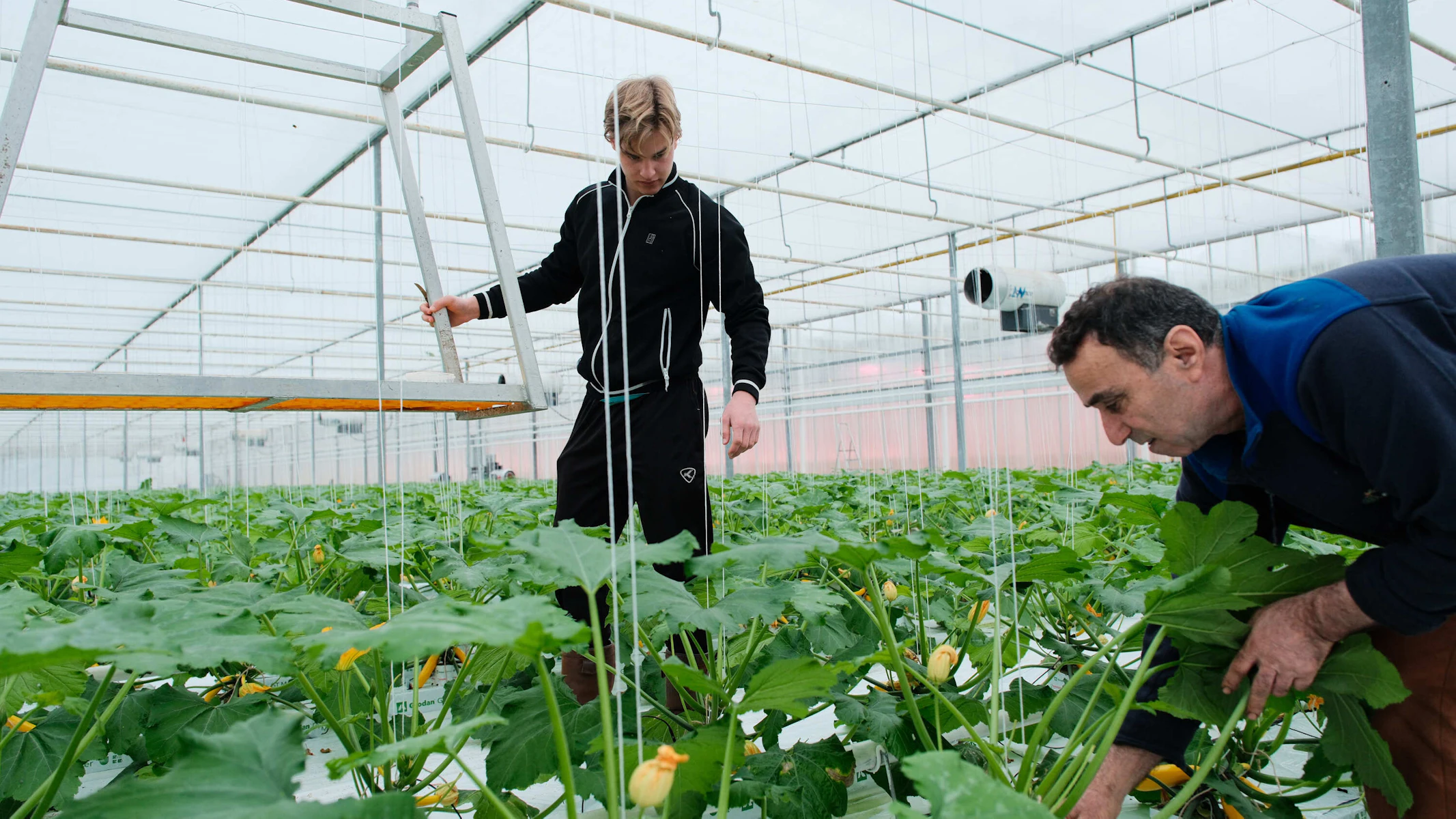
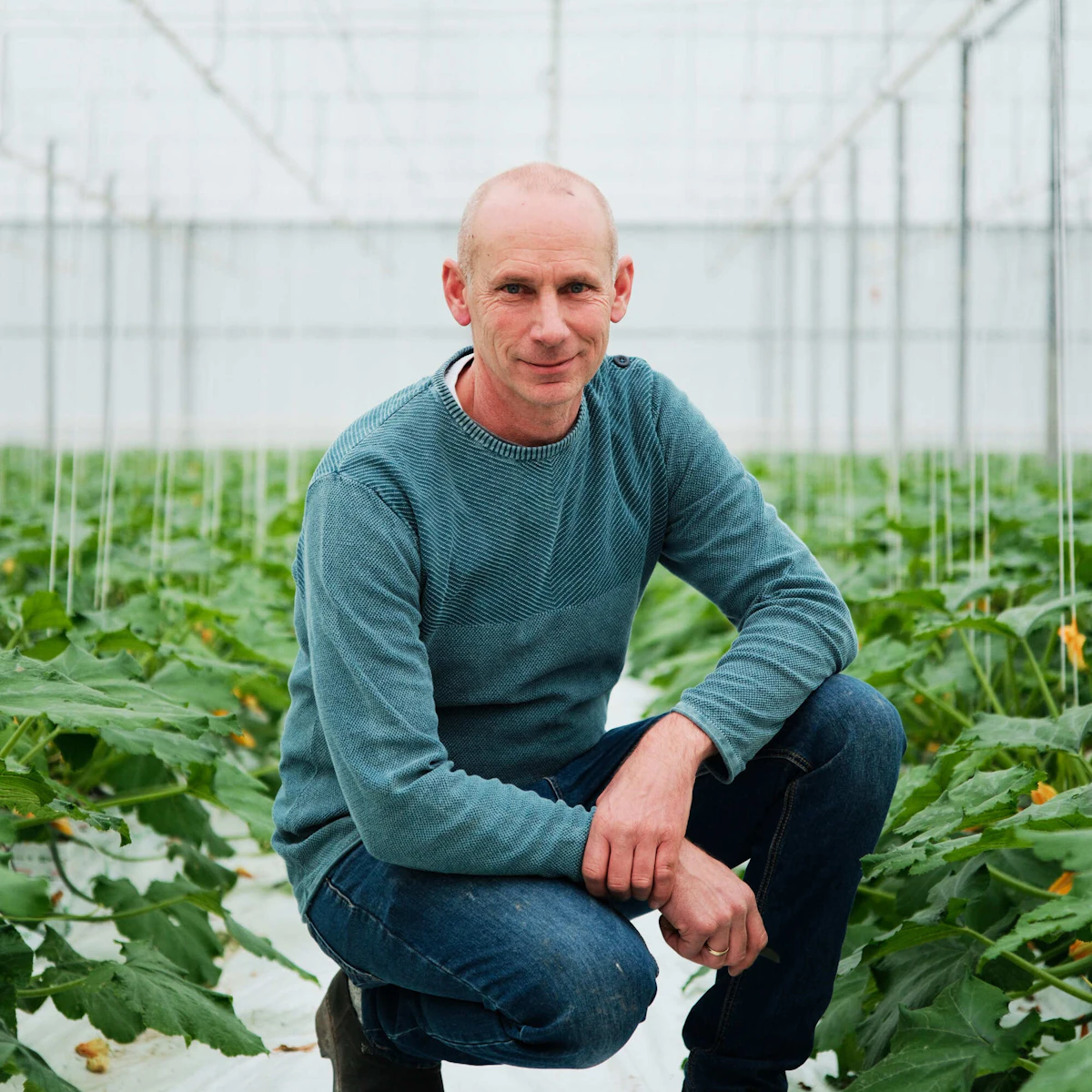
Jan-Willem looks visibly pleased. Together with Finn Verduijn, a young but hardworking and ambitious employee, he inspects the first harvest and tells us more about the farm. Jan-Willem grew up among the zucchini. He used to run a business with his father, Wim, and his brother, Bert. “We’ve always been in the zucchini business,” he says. “When we had to leave there, Bert started his own business in De Lier. I ended up here and restarted about ten years ago with green and yellow zucchini and some lettuce.”
What began as a relatively traditional crop gradually shifted toward specialization. “Green zucchini is grown outdoors in abundance during the summer. As a smaller grower, you can’t make a living from that,” he explains. “Yellow zucchini is more delicate and can’t really be grown outdoors very well. That makes it a niche product, and as a smaller grower, I saw my chance.” Here, on his own farm, Jan-Willem deliberately chose a different scale. “I’m consciously choosing not to run a mega-company—that’s not my style. I’d rather work with a small, enthusiastic group of young people. In our greenhouse, work and camaraderie go hand in hand.”
Choosing not to be a mega-company
Instead, he quietly continued to build a small-scale business with a clear focus: yellow zucchini as the mainstay, with a small portion of green zucchini and—increasingly important—zucchini flowers (the edible yellow flowers of the zucchini plant) and yellow mini-zucchini. “Demand for zucchini flowers and yellow mini-zucchini, in particular, is growing every year,” says Jan-Willem. “They’re shipped mainly to the Middle East, but also to Germany and cruise ships. They’re especially sought after because they add color to the plate.”
Heat as a game-changer
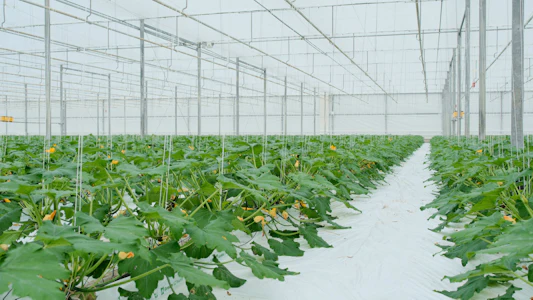
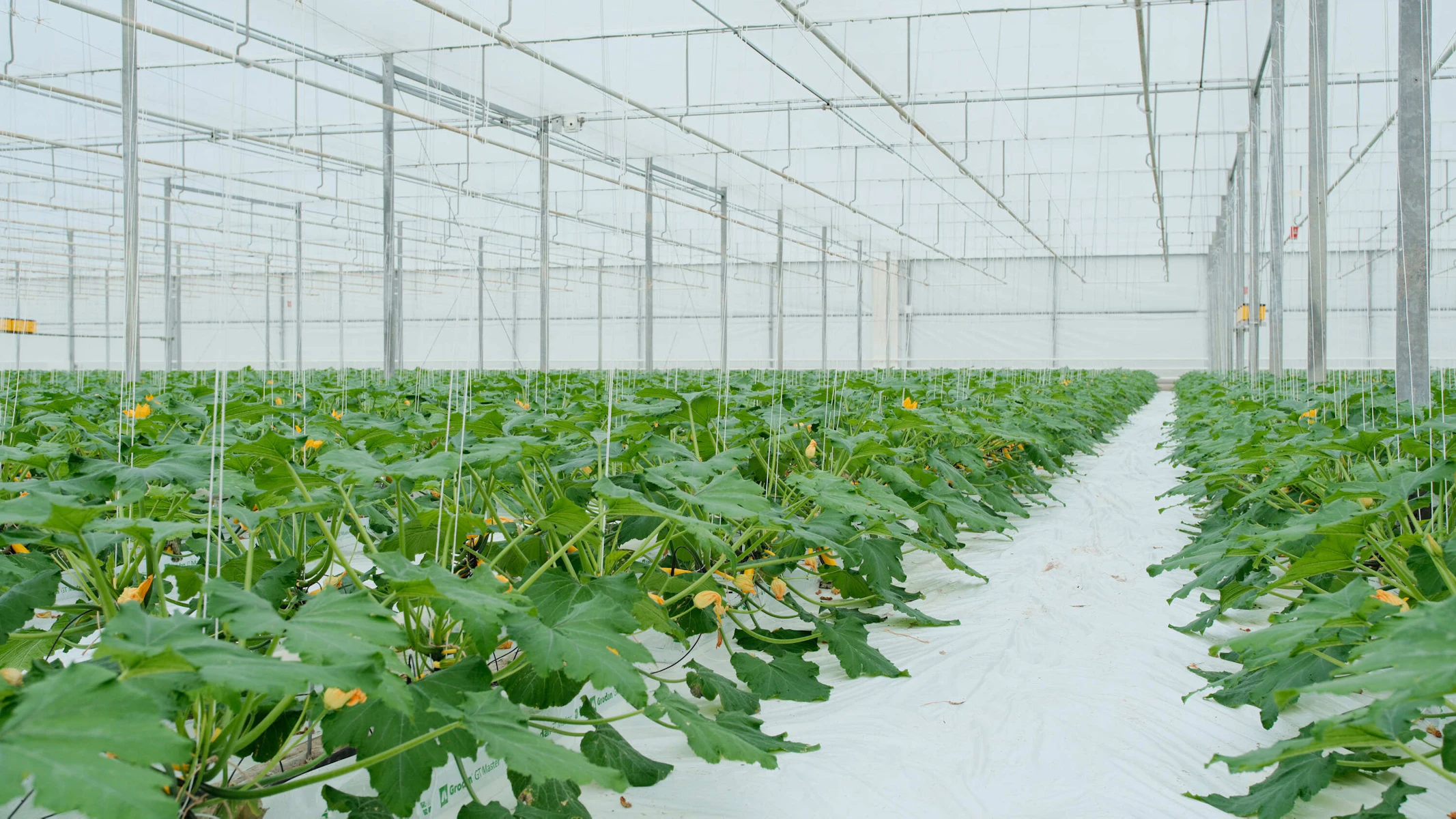
Four years ago, something important changed. “Until then, I’d been heating with hot-air stoves,” says Jan-Willem. “They worked fine, but they were also old-fashioned.” When plans for geothermal energy in the Westland region emerged and they approached me to see if I wanted to participate, I started to get excited. “If you connect to that system, you also have to invest: pipe heating, shade cloths, a gas backup for outages—the whole package. That’s no small step.” But Jan-Willem went for it anyway, and just like that, his greenhouse became future-proof: sustainable geothermal heating, rainwater collection, and multiple shade curtains to effectively retain the heat.
“The great thing about geothermal heat is that you have a constant temperature day and night—summer and winter alike.” And that gave him an idea: why wait until the end of January to pot the plants if the heat is already available? When the seedling grower let him know last summer that there was room to start potting as early as December 23, Jan-Willem didn’t have to think twice. “January 20 is the usual start date. We’re now almost a month ahead of schedule. It’s actually just a side benefit of managing heat wisely,” Jan-Willem says matter-of-factly. In any case, it shows what’s possible. “When you invest this much in heating and insulation, it’s actually a shame not to start sooner. This is the future.”
Learned early
In addition to sustainable innovations and plant cultivation, the company is primarily about people. Jan-Willem deliberately operates on a small scale. “Large-scale operations aren’t for me. They become impersonal, with temp agencies and just scraping by on the margin. I enjoy working with young people,” says Jan-Willem. “They are the future and bring fresh energy.” That combination has proven to be worth its weight in gold. “I have the time-tested wisdom from my early education and years of experience,” he says. “And they come up with new ideas. If I hadn’t had young people here, I would never have made those investments.”
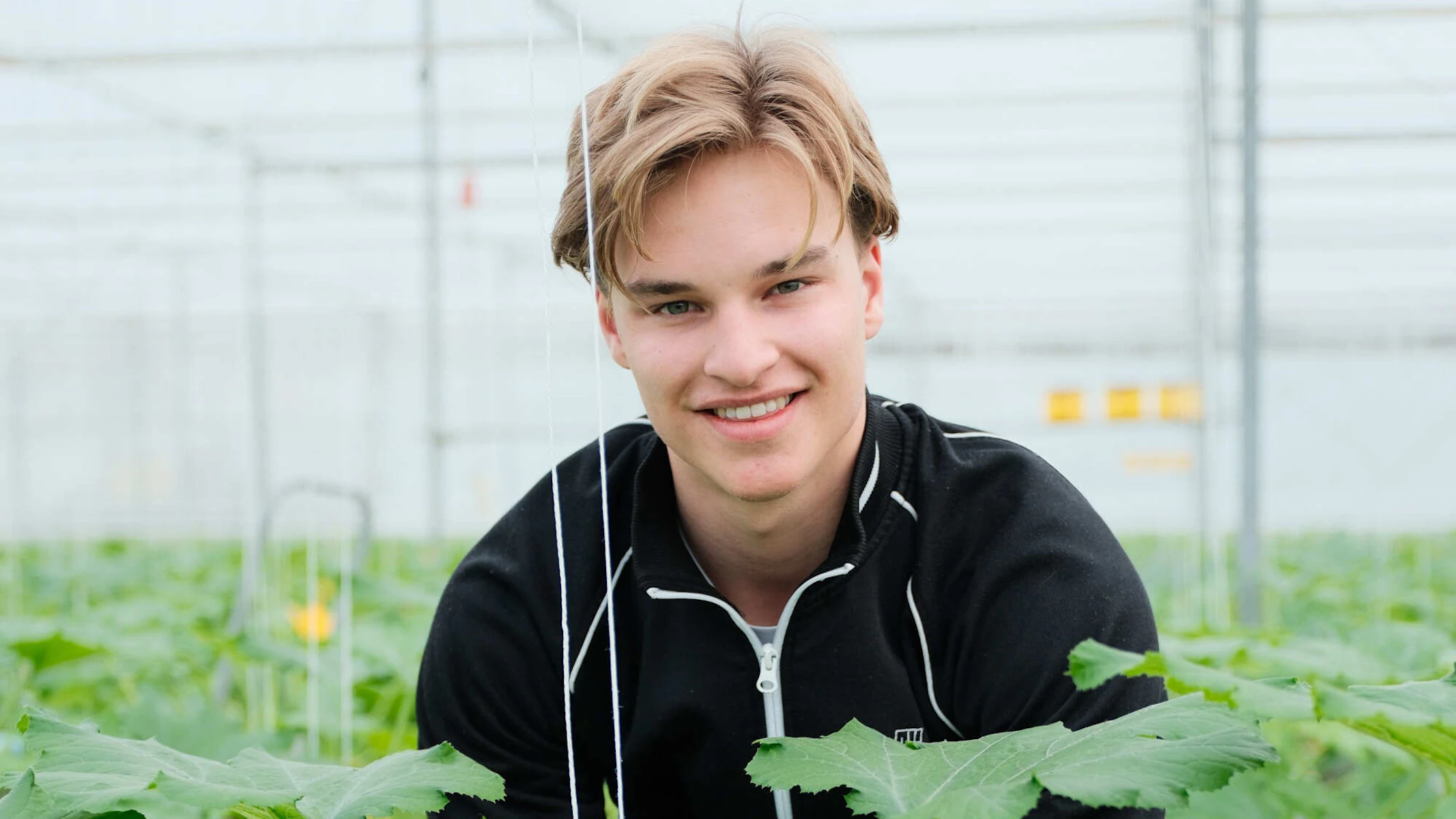
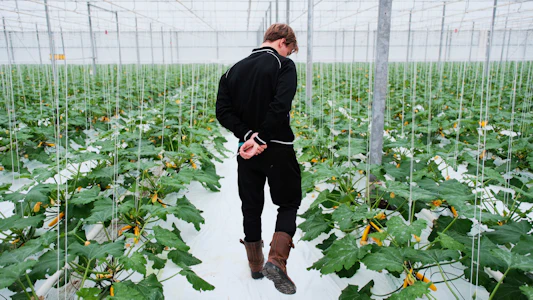
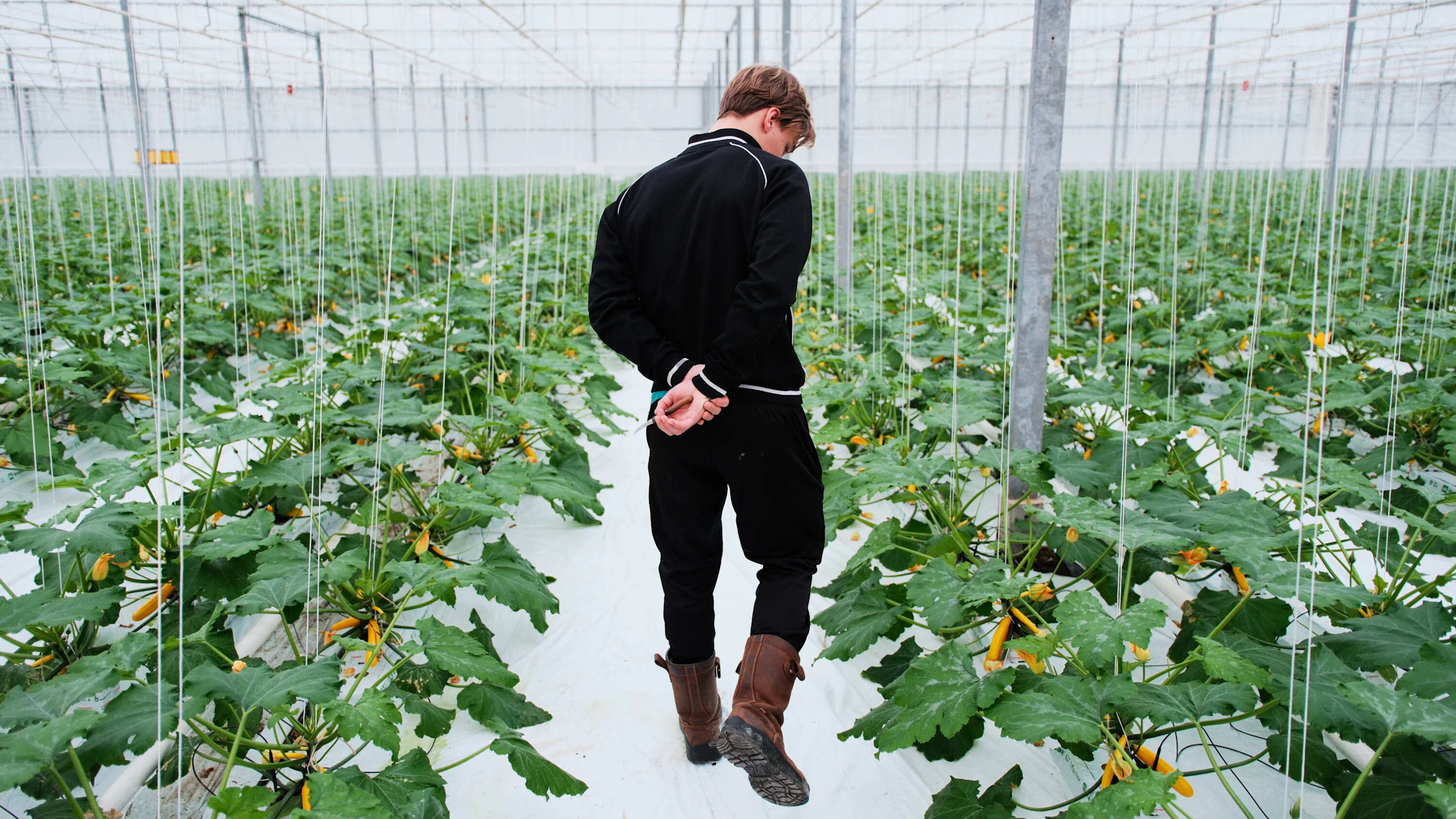
One of them is Finn Verduijn. He first came here when he was thirteen, as a friend of Jan-Willem’s second son, Thijs. “At first, I just hung around a bit and did the less pleasant chores,” Finn laughs. “But I started to enjoy the work more and more.” When Jan-Willem went on vacation a few years later, Finn—then seventeen—was put in charge along with Jan-Willem’s sons. “You run the garden,” Jan-Willem said. “That was pretty nerve-wracking,” says Finn. “I knew absolutely nothing about sales, but we just went for it.” Jan-Willem had faith in him. “You just have to give them the space to discover things for themselves and figure things out—they learn a lot from that.”
Finn’s Fleurs
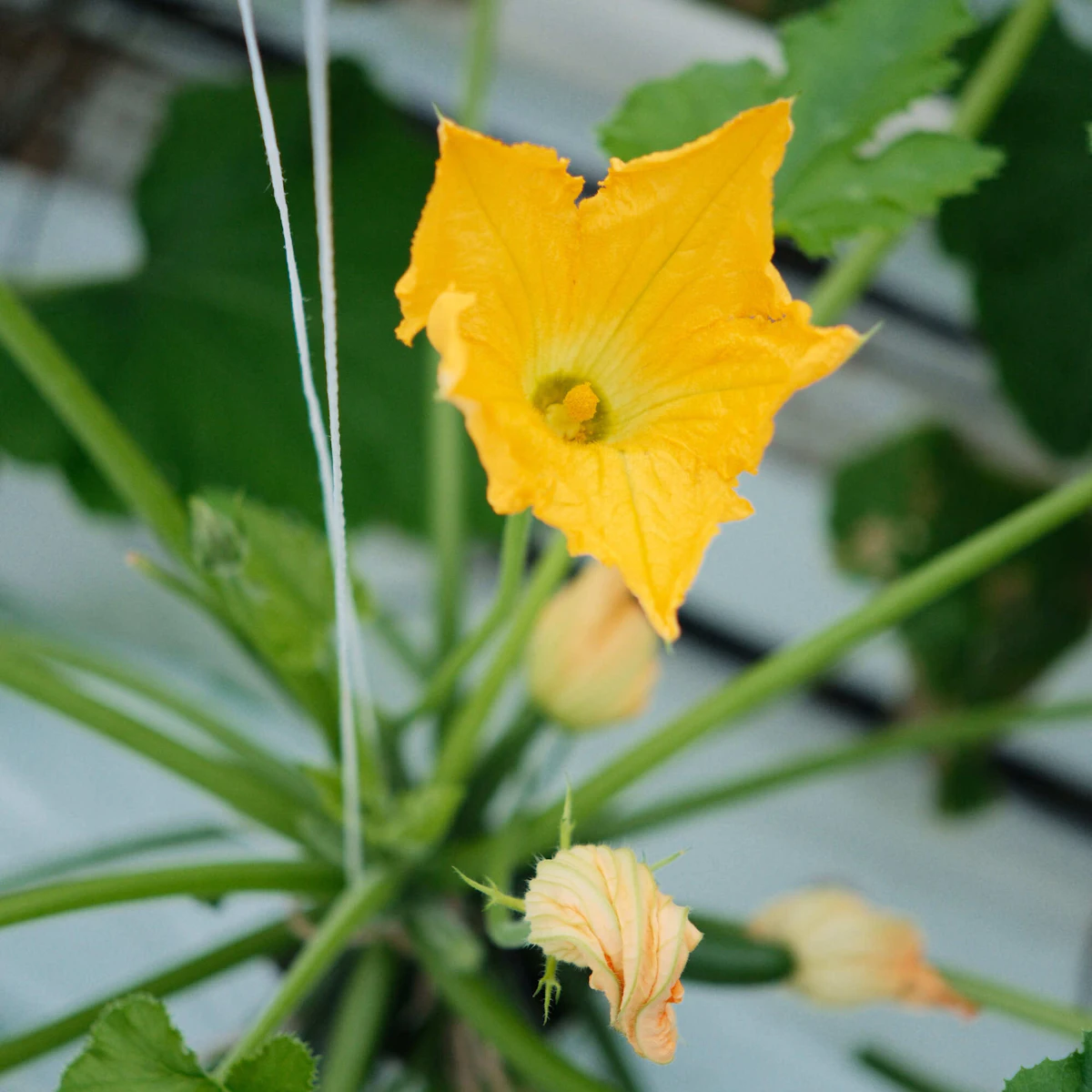
Finn now works almost full-time for Jan-Willem, but he’s also pursuing a college degree in Entrepreneurship. For his program, he had to start his own business. “I’d already explored several ideas until I suddenly started looking closer to home. That’s when I literally saw the answer right in my hands: zucchini fleurs. That’s how Finn’s Fleurs came to be—his own business focused on selling the zucchini fleurs and mini-zucchini grown at Jan-Willem’s farm. With its own packaging, branding, and a growing customer base. “I think it’s fantastic,” says Jan-Willem. “That he has the courage to do this and that I can support him in successfully building this business.”
The courgette fleurs are labor-intensive. They bloom for only one day, and on hot days, the flowers close as early as 10 a.m. So they have to be harvested before then. Sometimes, dozens of boxes have to be ready for sale first thing in the morning.
Our record was 113 boxes in a single day
“Our record was 113 boxes in a single day,” says Finn. “That really means working flat out with just a few guys to get everything ready on time.” Alongside Finn, Piet also works in the greenhouse. He’s a man of Turkish descent who’s lived in the Netherlands for forty years and bikes to work every day from The Hague. “He used to work through temp agencies,” says Jan-Willem. “But he wasn’t happy there. He is here.”
For Jan-Willem, it feels like things have come full circle. “In about ten years, I’d like to take a step back, and it would be nice to have someone by my side who can help keep the business running. You can’t manage it all on your own anymore, with all the rules and changes. But together, with a team of young people full of fresh enthusiasm, we’ll get there,” he smiles. And in the meantime, between the glass and the warm water from the earth, beautiful yellow zucchini are growing, showing how the future and tradition can go hand in hand.
I enjoy working with young people; they are the future and bring fresh energy and new ideas with them.