From tomato to soldier
At Corné and Wilma Smulders’ home in Oirschot, everyone gets a chance
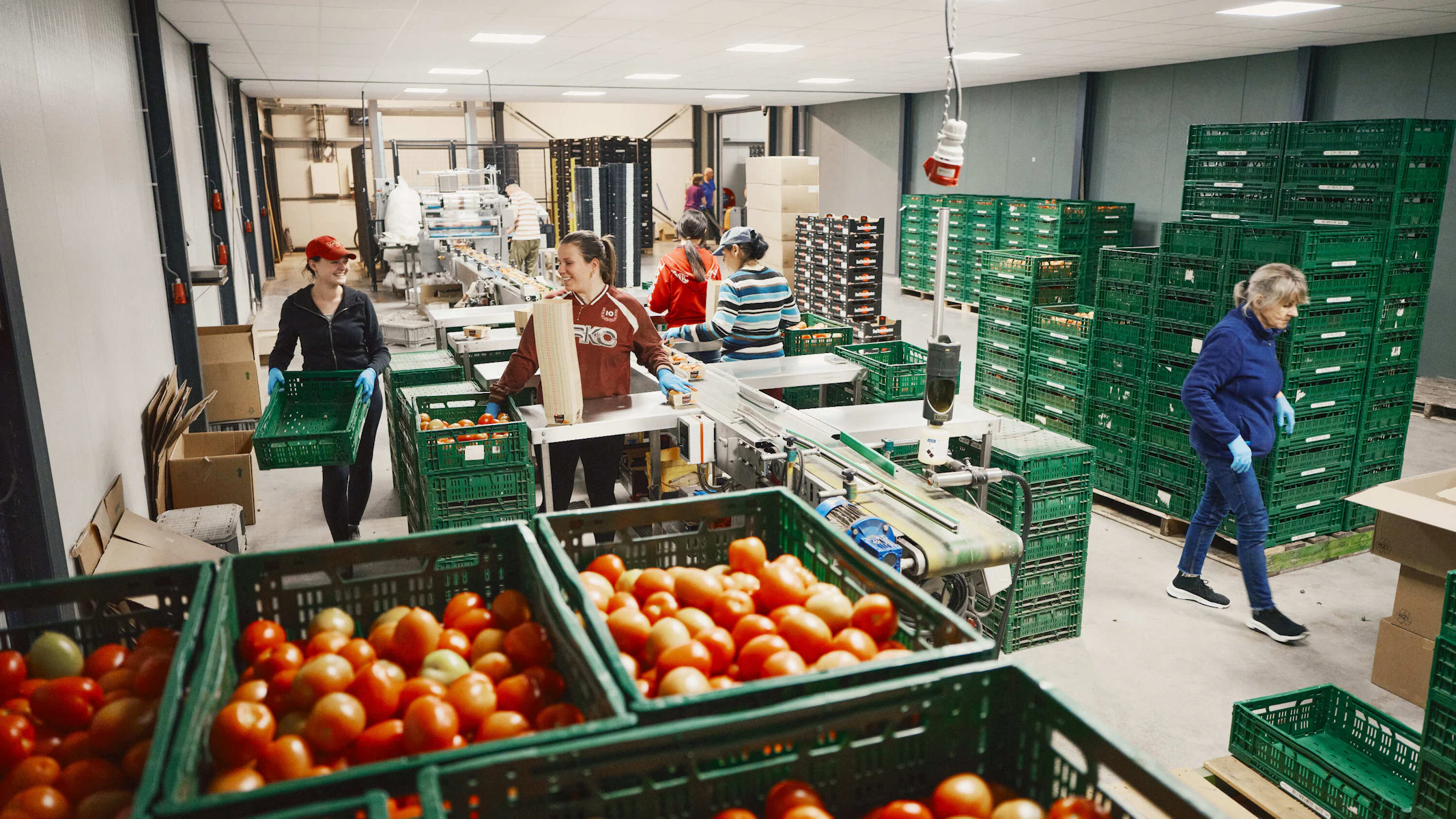
It’s a quiet morning on the farm of Corné and Wilma Smulders in Oirschot. In the greenhouse, rows of tomato plants hang tautly along the strings, and work is already in full swing in the warehouse. A few employees are busy processing the harvest, while Corné takes a moment to enjoy a cup of coffee in the break room.
“Things here pretty much just run their course,” he says matter-of-factly. “Everyone knows what needs to be done.” That goes for Nard, too. One morning a week, he comes to help out at the farm. He has Down syndrome and also works at other places in the area. “He once came here for an internship when he was eighteen,” Wilma explains. “His mother used to work with me in healthcare and asked if he could maybe get a spot here.” It turned out to be a good match. “For him, one morning here is enough,” says Corné. “But he’s really part of the team. Everyone enjoys having him around.”
From father to son
Corné grew up in the family business, also known as the Smulders tomato nursery. At a young age, he joined his father’s partnership. “I was twenty and my father was 63,” he says. “We started out together, and that same year something happened we’ll never forget.” On July 11—his father’s birthday, of all days—a tornado swept through the farm, flattening nearly everything. “Fortunately, the staff had just left, but it was really intense,” Corné recalls. “Roof panels and debris were scattered everywhere. We didn’t even feel safe inside the warehouse—everything seemed to be shaking. We found debris as far as 500 meters away.” After that, his father didn’t want to rebuild the business. “He said, ‘If it’s ever rebuilt, you’ll have to be the one to do it.’ And that’s what I did.” According to Wilma, not being afraid to take on a challenge is part of who Corné is. “He doesn’t tend to see obstacles right away,” she laughs. “That’s also his strength.”


Nard helps out at the business one morning a week; everyone enjoys having him around—he really fits right in.
Running the business together
Corné and Wilma got married in 1992, and two years later, Wilma officially joined the partnership. At first, she continued to work in healthcare on the side, but over time she became increasingly involved in the business. “When we moved here in 2001, we started with one hectare,” she says. “In 2005, we expanded the business further.” Today, Wilma works about twenty to twenty-five hours a week. “I mainly do work in the barn and handle part of the paperwork,” she says. “And Corné basically does the rest,” she adds with a laugh. Corné nods. “We try to work five days a week and take some time off on the weekend, although I often end up popping into the greenhouse on Saturday mornings anyway.”
Pioneering slicing tomatoes
In 2006, the couple started something new: slicing tomatoes that don’t lose moisture. In other words, a tomato that’s specially suited for slicing, dicing, or cutting into wedges—for example, for salads, meals, or sandwich shops. Officially, the variety is called the Intense tomato, and it’s since earned the nickname “anti-soggy tomato.” “When we started, we were among the first,” says Corné. “Five growers started out, but in the end only two remained. The variety was difficult to grow.” Still, Corné and Wilma believed in it. “We were in the kitchen ourselves and thought: what can you actually do with this?” says Wilma. “We used it in a stir-fry and noticed how flavorful and practical it was—a tomato that doesn’t leak. That was the moment we realized this product had potential.” They actively sought out markets, attended trade shows, and conducted market research. Now, the tomatoes are finding their way to, among others, processing facilities that supply supermarkets and meal kits. Soon, they’ll even start shipping to HelloFresh. “It’s a product we truly believe in,” says Corné. “And as it turns out, there’s a market for it, because we’re gaining new customers every year.”




Just give it a chance
Amid all the hustle and bustle at the company, there’s also room for people who have a hard time finding work elsewhere. Like Manon. She applied for a job a few years ago after having been out of work for a long time. “She was on sick leave for two years,” says Corné. “She’d been going through a rough patch for a while.” She started working at the company and gradually regained a sense of rhythm and enjoyment in her days. “It actually happened very naturally,” says Wilma. “We didn’t do anything special to make it happen.” Still, it made all the difference for her. Manon eventually worked 24 hours a week. She had some tough moments, but she kept coming in. “Things went really well the last year,” says Corné. “She had structure again, was cheerful, and enjoyed coming to work.” Recently, she made a new decision, Manon explains. “Corné said to me a while ago: ‘You’re still young—do you really want to work in the greenhouse your whole life? Maybe you’d like to try something different sometime.’ He thought the army would be a good fit for me, and I actually liked the idea myself, so I applied and made it through the admissions process.” This week is her last week in the greenhouse, because on Monday she has to report to the Royal Military Academy in Ermelo. Manon smiles. “So, from tomatoes to soldier.” “She really deserves it, and we’re glad we were able to help her along the way a little,” Corné nods approvingly. “I told her she’s always welcome to come back here if she doesn’t like it in the army after all. Hopefully that makes it easier for her to take this step now.”


If someone can work here and fits in with the team, we’re happy to give them a chance—we don’t have to think twice about it.
Belonging
Meanwhile, Nard also continues to come in one morning a week to help out. He now lives in supported housing nearby and can get to the company on his own. “Everyone in the village knows him,” says Corné. “For example, he’s the captain of the soccer club’s second team and goes to every game as the water boy.” When Nard moved, his friends even organized a real traditional “farmers’ send-off”: a covered wagon ride through the village, stopping at all the bars. “There were about fifty of us,” Corné laughs. “It was wonderful to see how large the group of people around him is—everyone likes him.” For Corné and Wilma, the fact that Nard works for them wasn’t something they had to think long and hard about. “We just did it because we could,” says Corné. “If someone can work here and fits into the team, we’re happy to give them a chance. He’s doing well and really enjoys coming here.” Wilma nods. “With just a little effort, you can quickly help someone get a lot further. And that’s wonderful.”
Keeping the business going
Meanwhile, the business keeps running smoothly. With permanent employees, seasonal workers, and a small team that’s been part of the company for years. “One employee has been here just as long as I have,” says Corné. “If I’m on vacation for a week, or go to Spain for work, I talk to him for five minutes, and then I know everything will be fine here.” Because Corné doesn’t like to sit still. Whether it’s new varieties, different cultivation methods, or solutions for changing markets: he keeps looking for opportunities. “That’s what I love about entrepreneurship,” he says. “Problems always arise. But fortunately, so do solutions!”